Fast Response, Tarping and Storm Stabilization

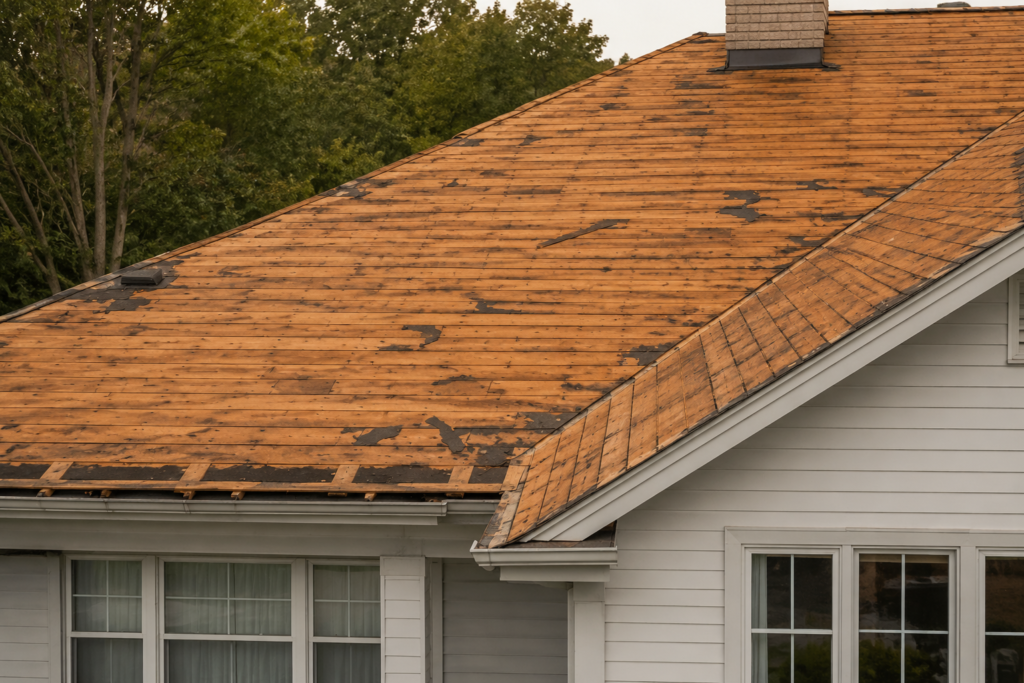
A storm has compromised your roof. Every hour without protection is another hour water can enter your home and compound the damage. Recon Reconstruction of Alabama deploys emergency roofing response throughout Clanton and Chilton County — professional tarping, structural stabilization, and damage documentation so your home is protected while the insurance process moves forward.

Emergency Roofing Services We Provide

Recon Reconstruction House Banner

Why the First Hours After Storm Damage Are the Most Critical

The damage a storm does to your roof in the initial event is fixed. What happens in the hours and days after that event is not.
A compromised roof opening during a second storm that passes through days later can double or triple the interior damage. A structural gap that allows ongoing water intrusion compounds exponentially over 24, 48, and 72 hours. Saturated insulation loses all R-value and becomes a moisture reservoir against the framing. Wet drywall begins to degrade. Subfloors absorb water and begin the process of structural compromise. Mold spore activation begins under the right conditions within 48 hours.
Every hour your roof remains unprotected after a storm event is an hour of compounding loss. Emergency stabilization stops that cycle. It does not fix the roof — that is what the permanent repair is for. What it does is hold the line while the insurance process catches up to the damage.
Recon Reconstruction responds to emergency roofing calls throughout Clanton and Chilton County. We deploy fast because we understand exactly what is happening to your home every hour you are waiting for a response.

Professional Emergency Tarping Why It Is Not Just Throwing a Tarp on a Roof

This matters more than most homeowners realize.
A tarp installed by someone who does not know what they are doing provides false security. An improperly secured tarp lifts in the next weather event. An undersized tarp leaves vulnerable areas exposed at the edges. A tarp installed without proper attachment to the roof structure can itself cause additional damage to shingles and flashing when it shifts or pulls free.
Professional emergency tarping means the right materials for the opening size and roof geometry, proper attachment to the structural elements of the roof rather than just draped over the surface, sealed edges that prevent wind-driven rain from entering underneath, and installation that holds through subsequent weather events until permanent repairs can begin.
Recon Reconstruction uses commercial-grade tarping materials on every emergency response. We install with proper mechanical attachment, overlap and seal at edges, and assess the full roofing perimeter to ensure no secondary openings are missed during the initial response.
We also document the condition and the tarping installation — with photographs — which supports your insurance claim and establishes the timeline of your emergency response for the adjuster.
Recon Reconstruction House Banner

What Happens After Emergency Stabilization

Emergency stabilization is the first step, not the last. Here is what the process looks like from the initial emergency call through permanent repair.
Emergency response — We deploy to stabilize the property and stop the immediate damage cycle. Tarping, board-up, and temporary structural support as required.
Damage documentation — During the emergency response visit we photograph and document all visible roof damage for insurance purposes. This initiates your claim documentation from the first hour.
Full assessment — Once the property is stabilized, we perform a comprehensive assessment of the full roofing system — not just the area of visible damage. Storm events frequently cause damage across a wider area than is initially apparent.
Insurance coordination — We communicate with your adjuster, provide documentation, and develop the scope of work for permanent repairs or full replacement based on the assessment findings.
Permanent repair or replacement — The same team that responded to your emergency manages the permanent roofing work. You do not start over with a new contractor. You work with the people who know your roof from the first hour of the event.

Storm Events That Generate Emergency Roofing Calls in Chilton County

Central Alabama’s storm profile creates specific emergency roofing scenarios that we respond to throughout the year. Here is what we most commonly see.
Tornado and severe thunderstorm events produce the most dramatic structural roof damage — missing sections, compromised framing, and full or partial roof structure failure. These events require immediate structural stabilization before any other work can begin.
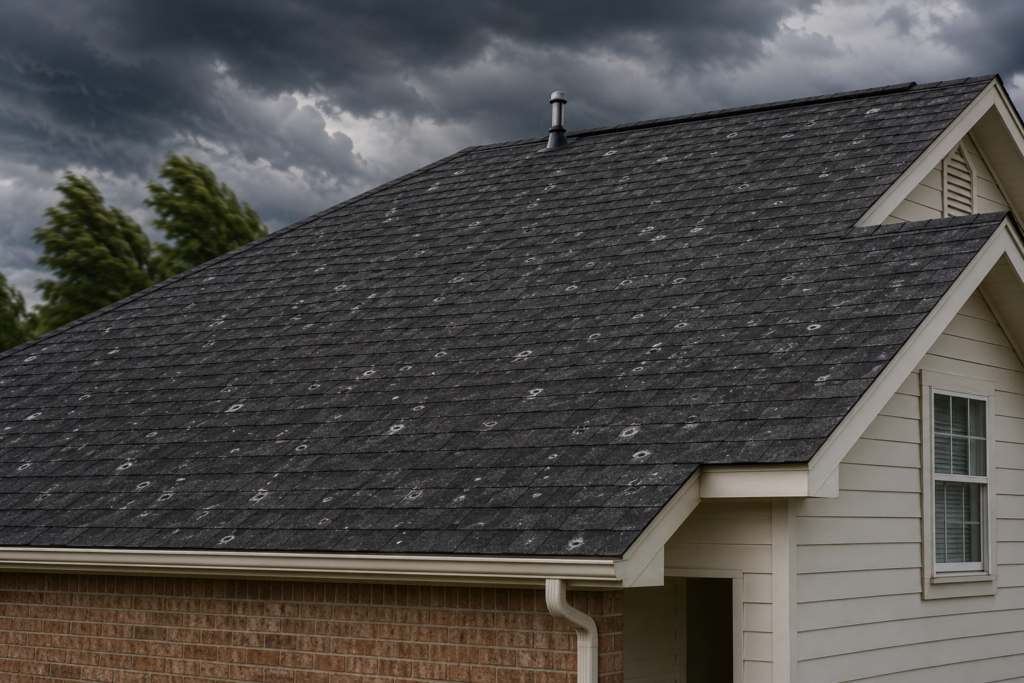
Hailstorms damage roofing systems across wide areas and may not produce immediately visible openings, but can create compromised shingle areas that allow water intrusion under the right rain conditions. Post-hail inspection is important even when there is no visible opening.
High-wind events lift shingles, pull flashing loose, damage ridge caps, and in significant events remove entire sections of roofing. Wind damage frequently creates multiple smaller compromised areas across the full roof plane rather than one obvious large opening.
Fallen trees and large limbs create impact damage that may penetrate the structural decking and framing beneath the shingles. Tree impact emergencies require assessment of the structural framing, not just the surface roofing materials.
Ice and freezing rain events — less common in Central Alabama but they do occur — can create ice dam conditions at eaves that force water under shingles and into the structure.
Recon Reconstruction House Banner

Emergency Roofing and Your Insurance Claim

Most storm-related emergency roofing events are covered losses under standard homeowner’s insurance policies. The emergency tarping and stabilization work is typically covered as a mitigation expense — reasonable steps taken to prevent further damage following a covered event.
There are two important reasons to use a licensed contractor for your emergency roofing response rather than attempting a DIY tarp installation.
First, professional installation provides actual protection. A tarp that fails in the next storm does not reduce your loss — it may increase it.
Second, documentation. Our emergency response visit generates photographic and written documentation of the roof condition at the time of the event. That documentation establishes the pre-mitigation damage condition for your adjuster, supports your claim, and creates a record that is difficult to establish after the fact.
We communicate with your insurance carrier from the emergency response visit forward. The emergency work is documented, the full damage assessment is conducted, and the permanent repair scope is developed and presented to your adjuster as a continuous coordinated process.

Why Clanton Homeowners Call Recon Reconstruction First

Recon Reconstruction House Banner

Frequently Asked Questions

Emergency Roofing in Clanton, AL

We respond to emergency roofing calls throughout Clanton and Chilton County as quickly as conditions allow. Response time depends on weather conditions at the time of the call, the volume of storm events affecting the area, and the nature of the emergency. For active storm events affecting multiple properties simultaneously, we triage by severity and deploy as fast as possible. Call us immediately at 205-955-0807 -- the sooner we know about the situation, the sooner we can get to you.
Emergency tarping cost depends on the size of the opening, the roof pitch and accessibility, the extent of the damage, and the materials required for a proper installation. We provide a written estimate for every emergency response. For insurance claims, emergency tarping and stabilization costs are typically covered as mitigation expenses under your homeowner's policy. Call us at 205-955-0807 -- we will assess the situation and give you a straight answer on cost and coverage.
In most cases, yes. Emergency tarping and stabilization are considered reasonable mitigation steps following a covered storm damage event, and the cost is typically reimbursable under your homeowner's policy as a mitigation expense. We document the emergency work and the pre-mitigation damage condition in a way that supports that reimbursement claim. We recommend notifying your insurance carrier as soon as possible after a storm damage event -- the sooner you initiate the claim, the smoother the process.
Stay safe first. Do not attempt to access a damaged roof in unsafe conditions -- wet surfaces, structural compromise, or active weather. Once it is safe to do so, photograph the visible damage from the ground if possible. Call your insurance company to initiate the claim. Then call Recon Reconstruction at 205-955-0807. We handle the emergency stabilization, the professional documentation, and the insurance coordination from there. Do not attempt to tarp the roof yourself unless you have professional roofing experience and the proper safety equipment.
No. Emergency tarping is temporary stabilization. It stops the immediate damage cycle and protects your home while the insurance authorization process moves forward for permanent repairs. Tarps degrade under UV exposure and weather stress and are not a long-term solution. We schedule the permanent assessment and scope development during the emergency response visit so the transition from emergency stabilization to permanent repair happens as quickly as the insurance process allows.
Yes -- and that is the intended workflow. The same team that responds to your emergency manages the permanent roofing repair or replacement. You do not need to find a separate contractor for the permanent work. We already know your roof from the emergency visit, we have the documentation in place, and we are already communicating with your adjuster. Keeping the project with one contractor eliminates the transition gap and speeds up the path from emergency response to completed permanent repair.

Roof Emergency in Your Clanton or Chilton County Home?

Do not wait. Call Kyle McRae directly at 205-955-0807 right now. Every hour without protection is an hour of additional damage to your home.