Central Alabama’s storm profile creates specific emergency roofing scenarios that we respond to throughout the year. Here is what we most commonly see.
Tornado and severe thunderstorm events produce the most dramatic structural roof damage — missing sections, compromised framing, and full or partial roof structure failure. These events require immediate structural stabilization before any other work can begin.
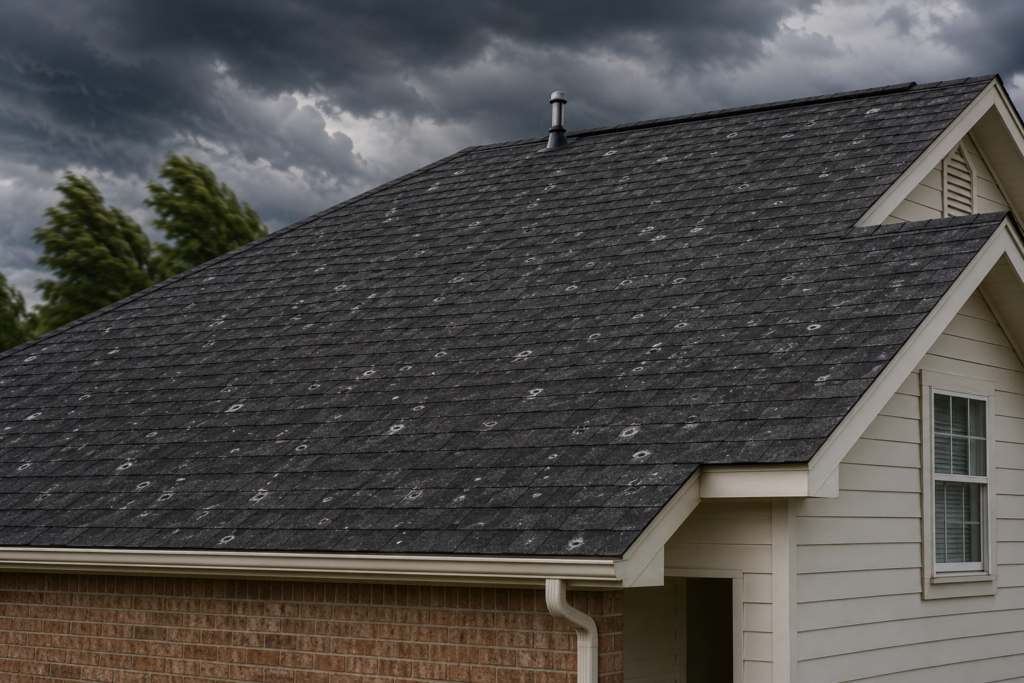
Hailstorms damage roofing systems across wide areas and may not produce immediately visible openings, but can create compromised shingle areas that allow water intrusion under the right rain conditions. Post-hail inspection is important even when there is no visible opening.
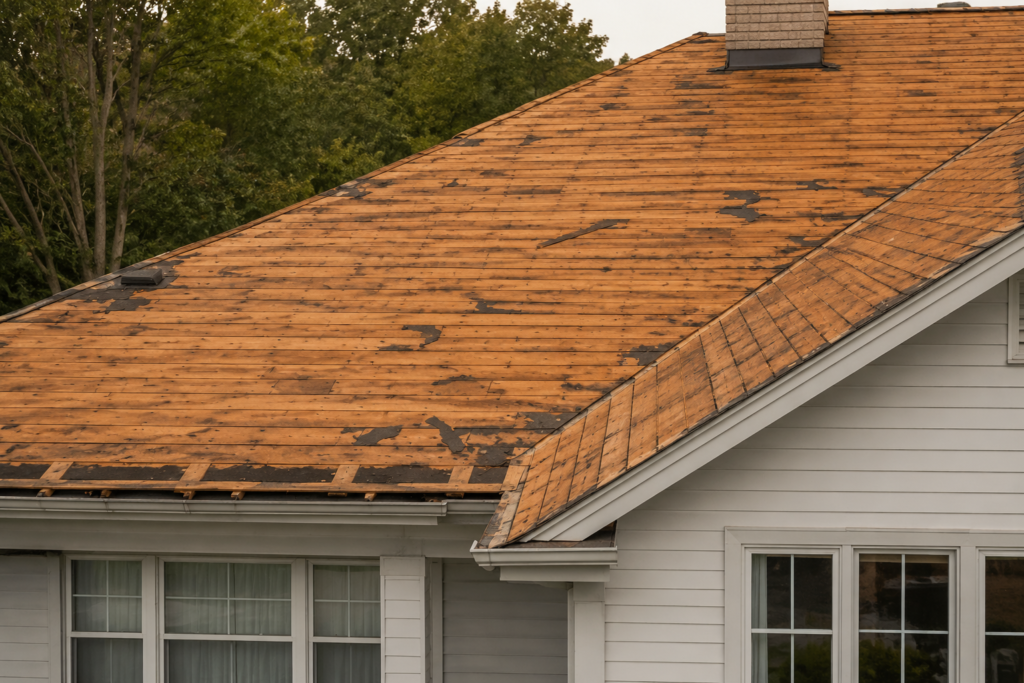
High-wind events lift shingles, pull flashing loose, damage ridge caps, and in significant events remove entire sections of roofing. Wind damage frequently creates multiple smaller compromised areas across the full roof plane rather than one obvious large opening.
Fallen trees and large limbs create impact damage that may penetrate the structural decking and framing beneath the shingles. Tree impact emergencies require assessment of the structural framing, not just the surface roofing materials.
Ice and freezing rain events — less common in Central Alabama but they do occur — can create ice dam conditions at eaves that force water under shingles and into the structure.